
TalesKids
From an empty domain to a bedtime library of thirty-nine stories.
Client projecttaleskids.com (opens the live site in a new tab)
Bedtime stories, built to be found
TalesKids publishes free bedtime stories for young children: talking animals, retold fairy tales and gentle “scary” stories that stay playful. Flexminde built the site on WordPress and set its structure with keyword research, so every story has an obvious home and every page is built for the parent reading it aloud.
TalesKids in numbers
- 39stories publishedLive site, 27 September 2026
- 3story categoriesLive site, 27 September 2026
- Oct 2025first stories publishedPublication dates on the live site
These figures describe the library as it stood on the live site on 27 September 2026. They are not traffic figures; none have been published for this project.
The brief and what came of it
The Problem
Bedtime stories is a crowded search space, full of long-established sites and content farms. A new domain had to earn a place in it from nothing, with a library that did not exist yet, and pages that work for the person actually using them: a parent, on a phone, in a dim room, with a child waiting.
The Solution
Flexminde built the site on WordPress with its structure set by keyword research. The research decided the three categories the library is organised around, Animal Stories, Fairy Tales and Scary Stories, and those categories became the menu. Every story page then follows the same structure: an info box with reading time, age range and moral, the characters, the story, and notes for the parent reading it.
The Outcome
Thirty-nine stories across the three categories, published since October 2025. Each one follows the same page structure, so a parent who has read one TalesKids story knows where everything is on the next.
A story page built for reading aloud
A bedtime story is not read the way an article is. It is read aloud, by an adult, to a child who is supposed to be falling asleep. So the story page answers the questions a parent has before starting — how long, what age, what is the point of it — and then gets out of the way.
Three categories, decided up front
Animal Stories, Fairy Tales and Scary Stories came out of the research as distinct kinds of demand, and they are the whole of the main menu. Nothing sits uncategorised.
The facts before the story
An info box at the top of every story gives the reading time, the age range and the moral, so a parent can choose the right story for tonight without reading it first.
Notes for the reader, not just the child
After the story come reading tips on voices and pacing, questions to ask afterwards and ways to extend it. The page is written for the adult holding the phone.
The signals search engines look for
Rank Math handles titles, descriptions and structured data on every story, and the site carries an About page, a contact route and the full set of policy pages.
What it looks like
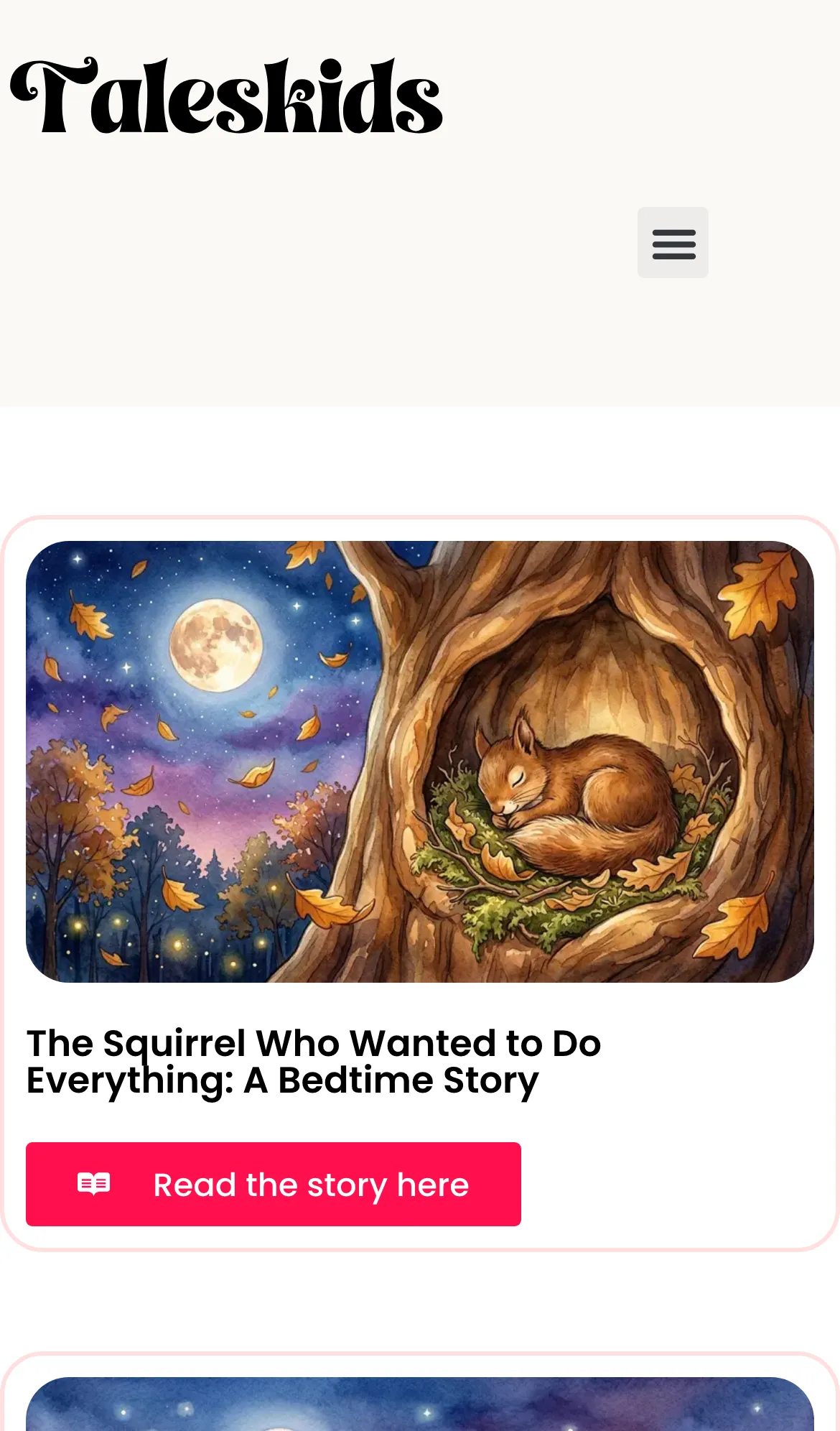
Captures of the live site, taken today. Open it yourself and compare — that option is the point of showing the address.
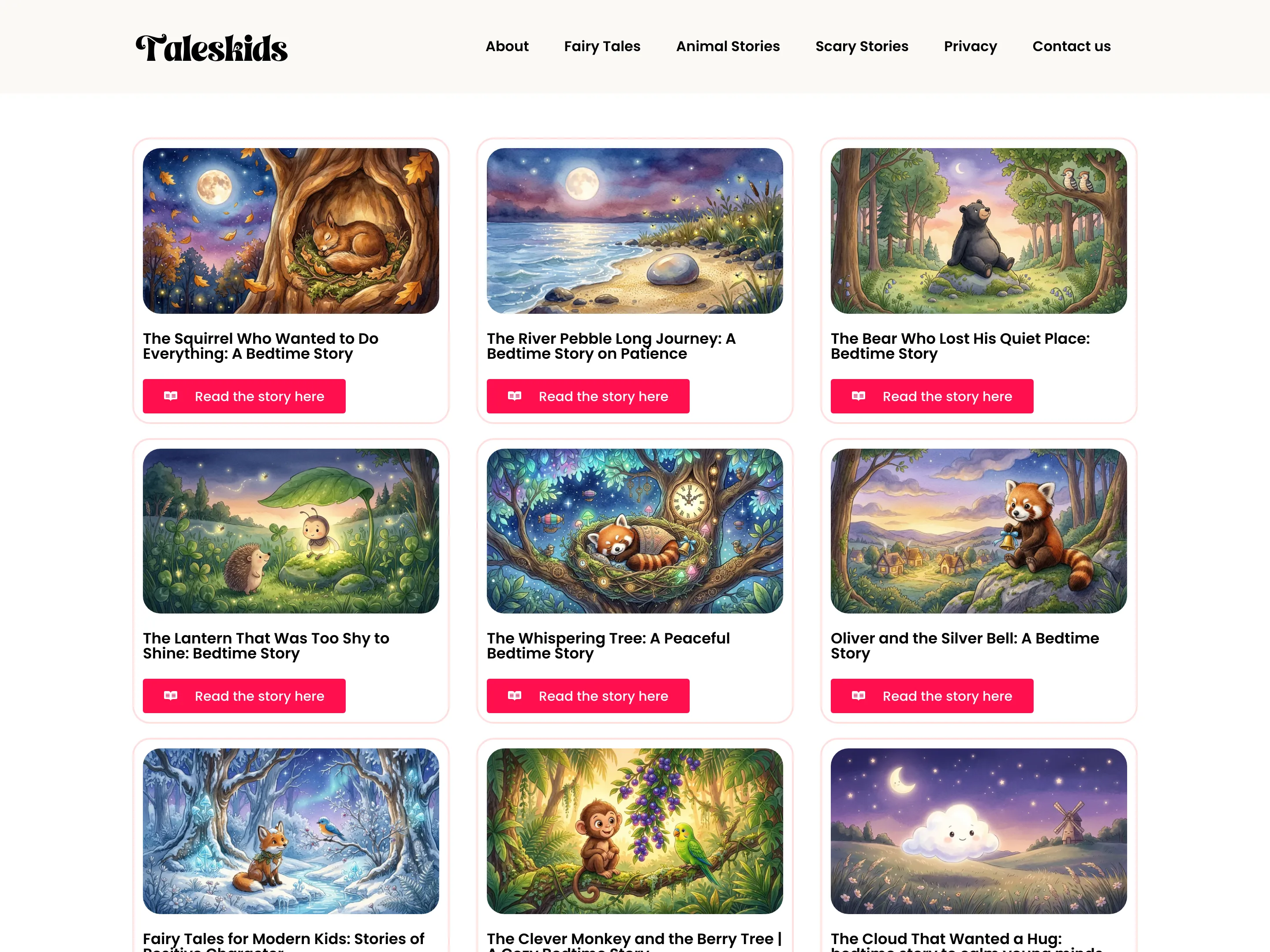
Home — the latest stories, three categories in the menu 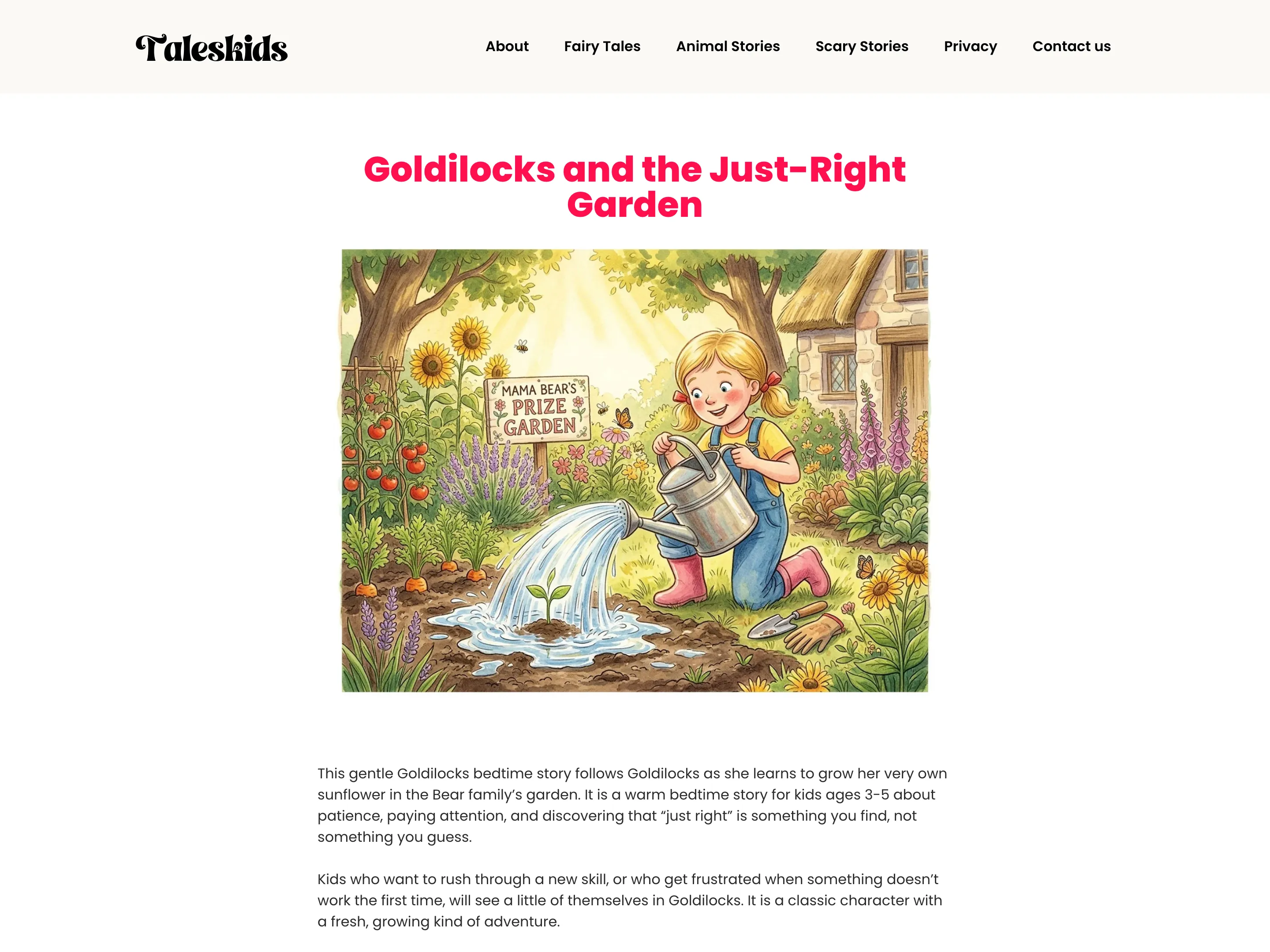
Story — the illustration, then straight into the story 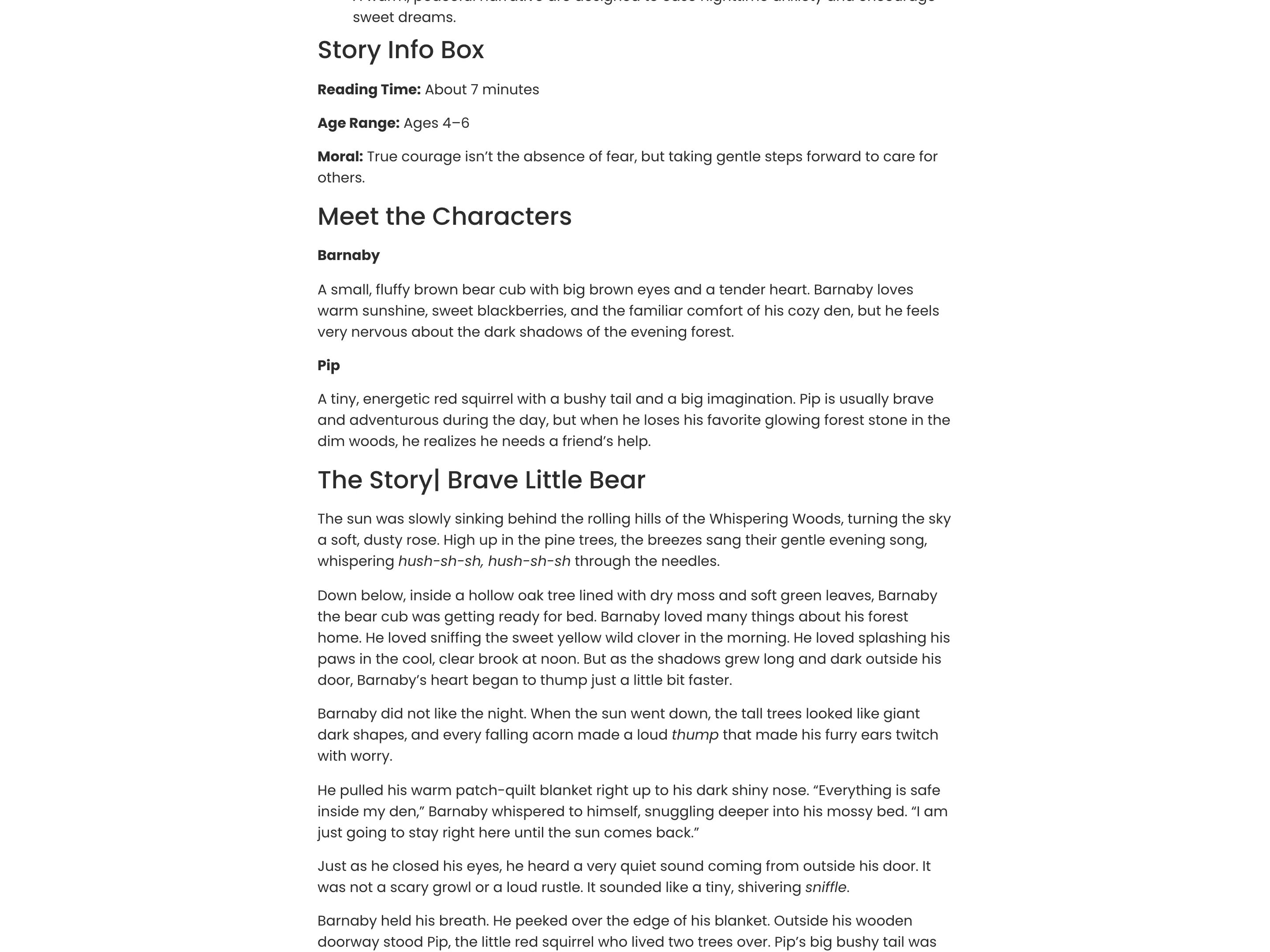
Info box — reading time, age range and moral up front 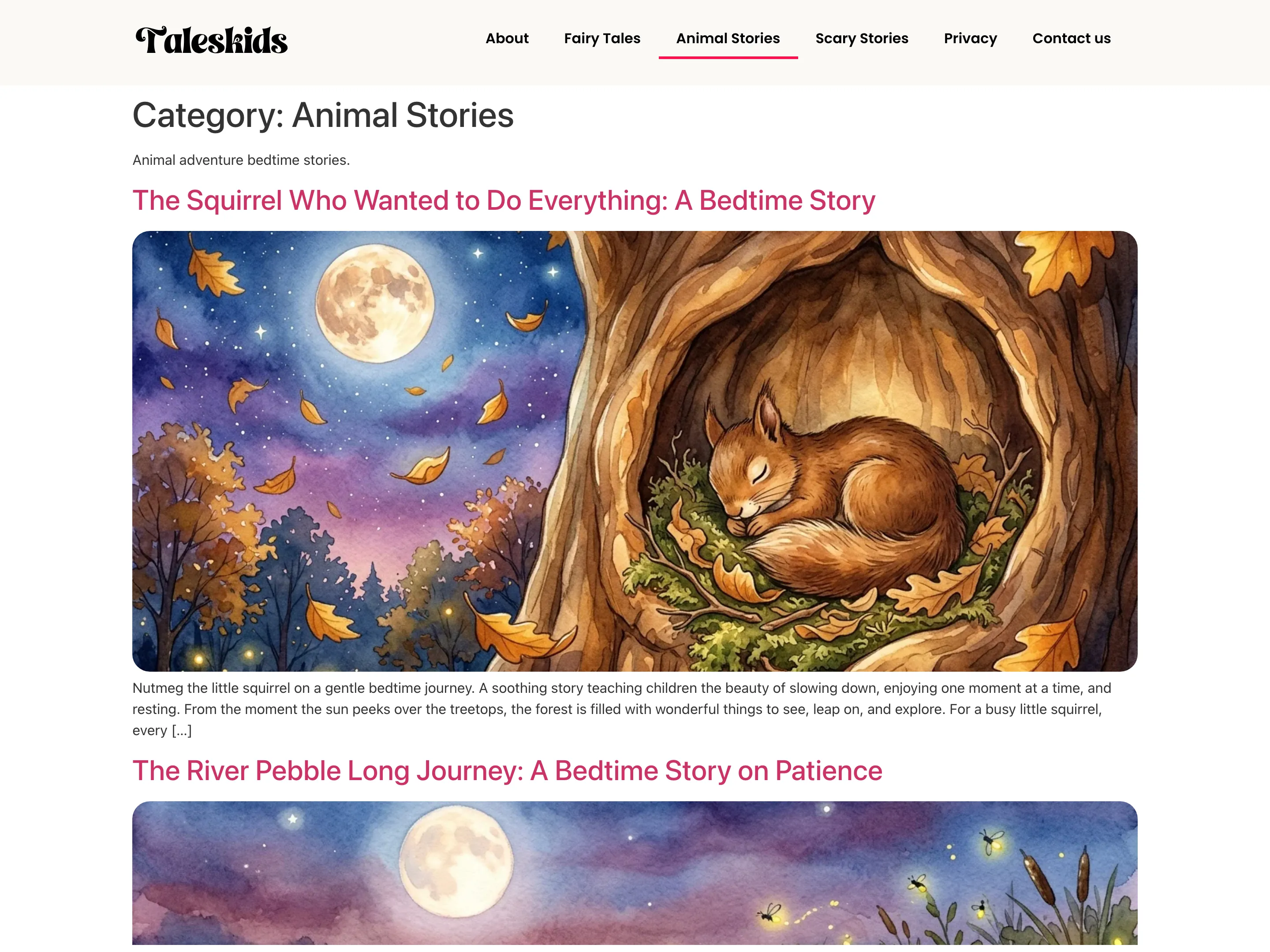
Category — one of the three the library is organised around
The shape of the library
Thirty-nine stories across three categories. Animal stories make up just over half, and every story sits in exactly one category.
- 20storiesAnimal Stories
- 11storiesFairy Tales
- 8storiesScary Stories
Built for steady publishing
The site runs on WordPress with the Hello Elementor theme, and its templates are built in Elementor. The home page, the category archives and the story pages are templates, so a new story takes its layout from the site rather than from whoever publishes it.
Every story follows the same structure: an info box with reading time, age range and moral, the characters, the story itself, the moral, reading tips for parents, ways to extend the story, related stories and a short FAQ. Rank Math sets the metadata and marks each story up as an article for search engines.
Around the library sit the pages a site for families needs to be trusted: an About page explaining how the stories are written and reviewed, a contact page, and privacy, cookie, terms and disclaimer pages.

Thirty-nine stories. Three categories. One page, built for bedtime.
How the work ran
In this order, and no stage started before the one before it had produced something the client had seen.
Keyword research
What parents search for at bedtime, grouped into clusters with enough demand behind each to justify a category.
Content architecture
The clusters became three categories, the categories became the menu, and the URL structure was set to match.
The WordPress build
WordPress, Hello Elementor and Elementor templates for the home page, the category archives and the story pages.
The story template
Info box, characters, the story, the moral, reading tips, ways to extend it, related stories and an FAQ, in the same order on every story.
Search foundations
Rank Math for metadata and structured data, clean URLs, and the About, contact and policy pages a family site is judged on.
The services behind TalesKids
The same work is available on its own. These are the parts of it this project actually used.
WordPress & WooCommerce
WordPress and WooCommerce development: new builds, online stores, and rescues of slow or unmaintainable sites. Set up so your team can edit content without breaking anything.
SEO
SEO services from a senior-led studio: keyword research, technical and on-page SEO, structured data and Core Web Vitals, plus the off-page work that builds authority over time.
Web Development
Website creation and web development from a senior-led studio. WordPress, Next.js and Astro builds, with semantic markup, accessibility and performance handled while the site is being made.
TalesKids questions
What people ask about this project once they have seen the numbers. If yours is not here, ask it on a first call.
What did Flexminde actually build here?
The website itself, on WordPress, and the keyword research behind its structure. That covers the categories, the URL structure, the Elementor templates and the story page structure. The stories and the illustrations are the client’s own.
Why give every story the same structure?
Because the person reading it is a parent with a tired child, not someone browsing. When every story puts the reading time, age range and moral in the same place, a parent can pick tonight’s story in seconds, and finds the reading tips where they found them last time.
Why are there no traffic figures on this page?
Because none have been published for this project, and this site does not invent them. The figures shown describe the library itself, which anyone can check on the live site.
Your project could be the next one here.
Tell us what you are building and what already exists. You get a straight answer on whether it is a fit, and a written scope before anything starts.
- Senior-led from first call to launch
- Written scope before any build starts
- Built to WCAG 2.2 AA and tested
- No quote until you are ready