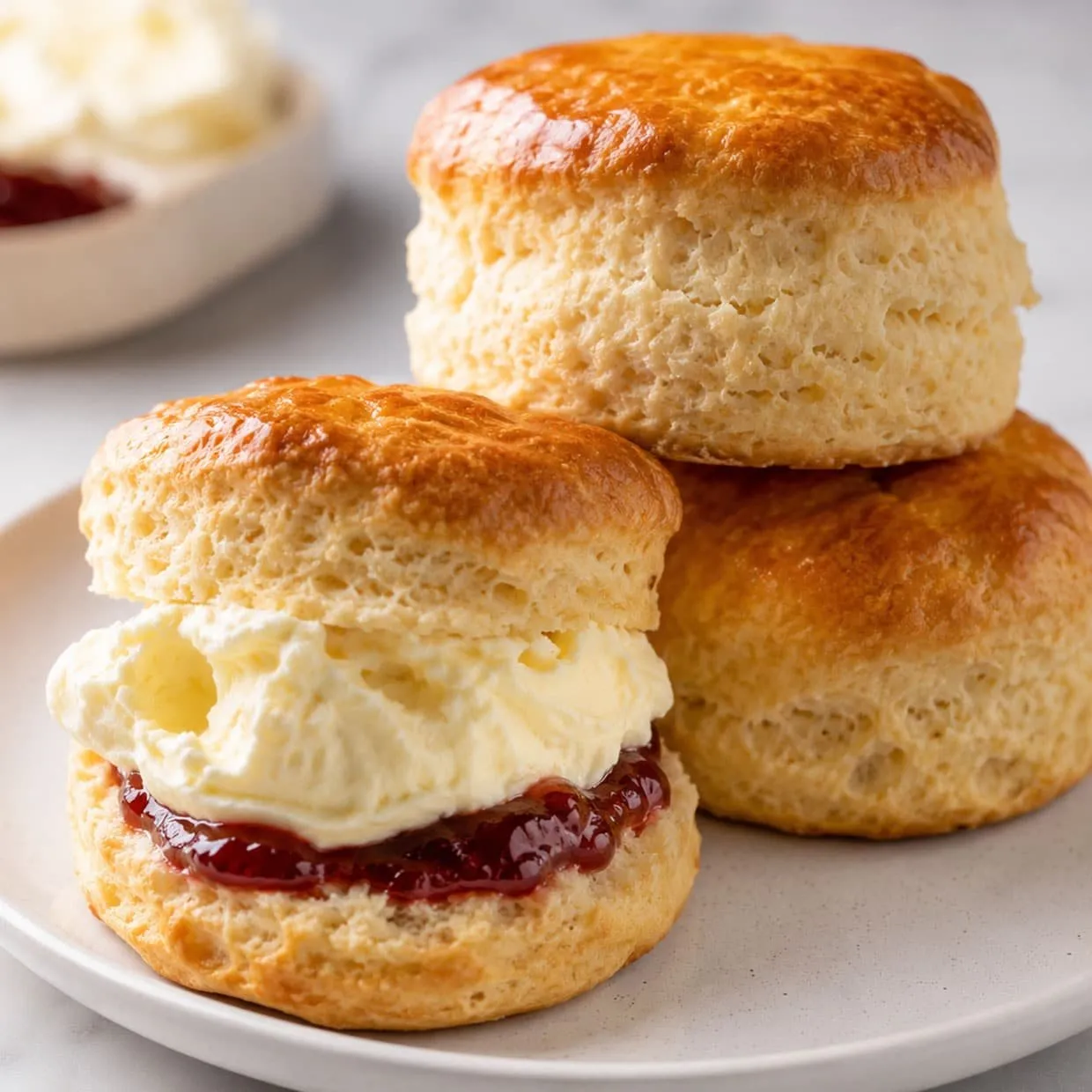
AustRecipes
From a new domain to twenty-five thousand readers in nine months.
Client projectaustrecipes.com (opens the live site in a new tab)
Easy Aussie recipes, built to be found
AustRecipes publishes Australian home cooking for people who want the recipe to work the first time. Flexminde built the site on WordPress and set its content structure with keyword research, so the archive had somewhere to grow into before the first recipe was written.
AustRecipes in numbers
- 25Kreaders so far in 2026GA4 active users, 1 January – 21 September 2026
- 88%arrive from a search engineGA4 sessions by source, same period
- 61recipes publishedLive site, September 2026
Figures cover 1 January to 21 September 2026 and come from the site’s own analytics. Nothing here is projected forward to a full year.
The brief and what came of it
The Problem
A new domain in one of the most contested niches on the web. No archive, no audience, and competitors with twenty-year head starts on the same searches. Whatever got built had to earn its readers from nothing, and it had to be publishable by one person, in a kitchen, without a developer on call.
The Solution
Flexminde built the site on WordPress and settled its structure before the writing started. Keyword research decided the four categories the archive is organised around, and those categories became the navigation. The recipe template was then built for how a recipe is actually used: on a phone, mid-task, with flour on your hands. Jump to recipe and print sit above the fold, and a contents list is generated from the headings so nobody scrolls through a life story to reach the ingredients.
The Outcome
Sixty-one recipes across four evenly weighted categories, drawing roughly 25,000 readers in the first nine months of 2026. Around 88% of them arrive from a search engine, which is the traffic a publication keeps rather than rents. The owner publishes without touching layout, and the navigation has not been rewritten once.
Structure first, then the recipes
Most recipe sites are built as a pile of posts and given a structure afterwards, once the pile has become unmanageable. This one was built the other way round. The categories came out of keyword research before publishing began, which is why the archive still balances at sixty-one recipes and why the navigation has never needed rewriting.
Four categories, decided up front
Dinner, Sweets, Party Food and Snacks. Each one came out of the research as a real cluster of demand rather than an editorial hunch, and each carries a comparable share of the archive.
The navigation mirrors the structure
Those same four categories are the main menu. A reader and a crawler see the identical map of the site, which is the cheapest internal linking improvement most publications never make.
A recipe template built for kitchens
Jump to recipe, print, and an automatic table of contents on every post. The page assumes you are mid-task on a phone, not reading an essay at a desk.
The signals search engines look for
A named author with a real biography page, published and last-updated dates on every recipe, breadcrumbs, and the full set of policy pages. None of it is decorative.
What it looks like
Captures of the live site, taken today. Open it yourself and compare — that option is the point of showing the address.
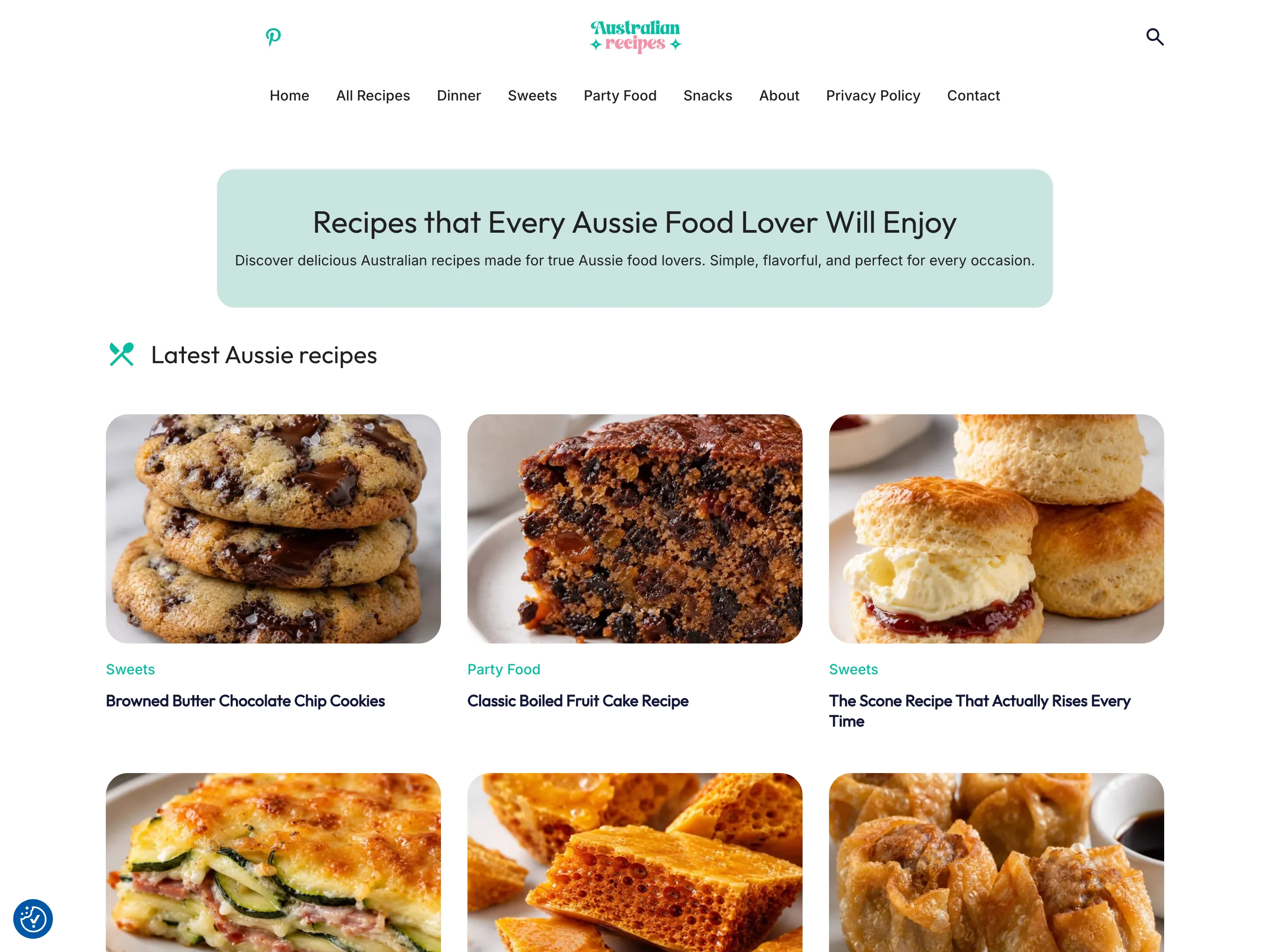
Home — the latest recipes, four categories in the menu 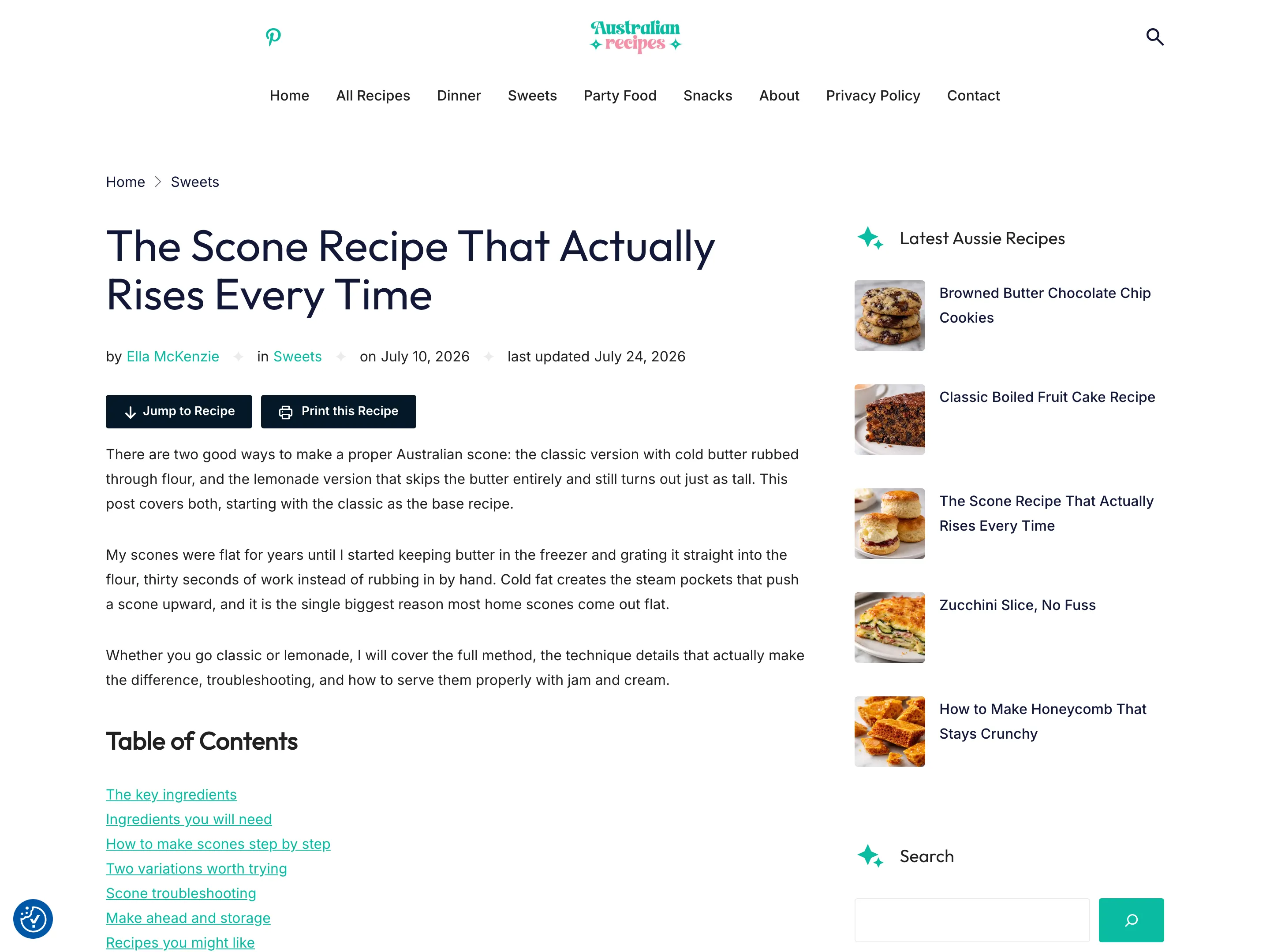
Recipe — byline, dates, jump to recipe, print, contents 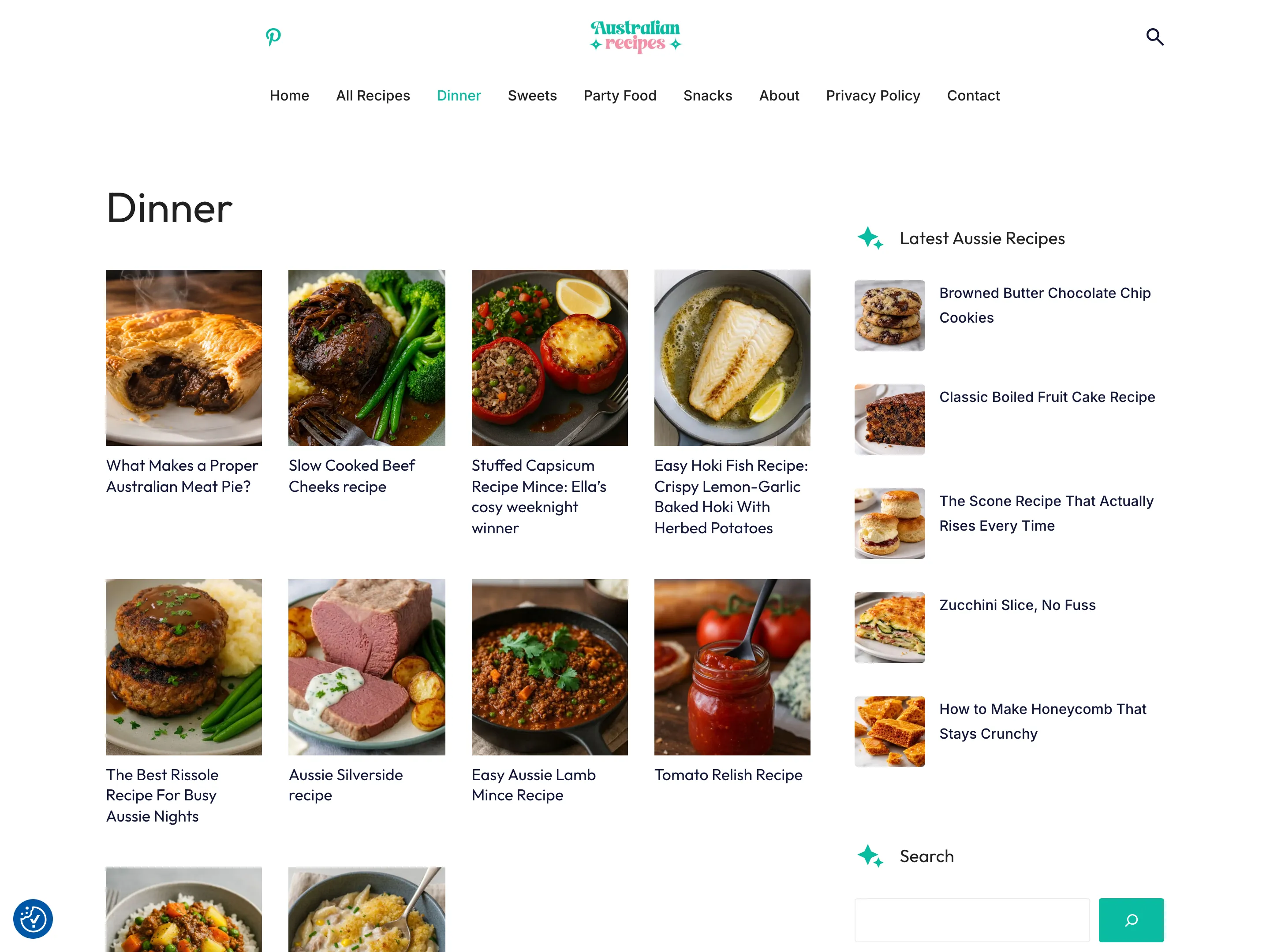
Category — one of the four the site is organised around 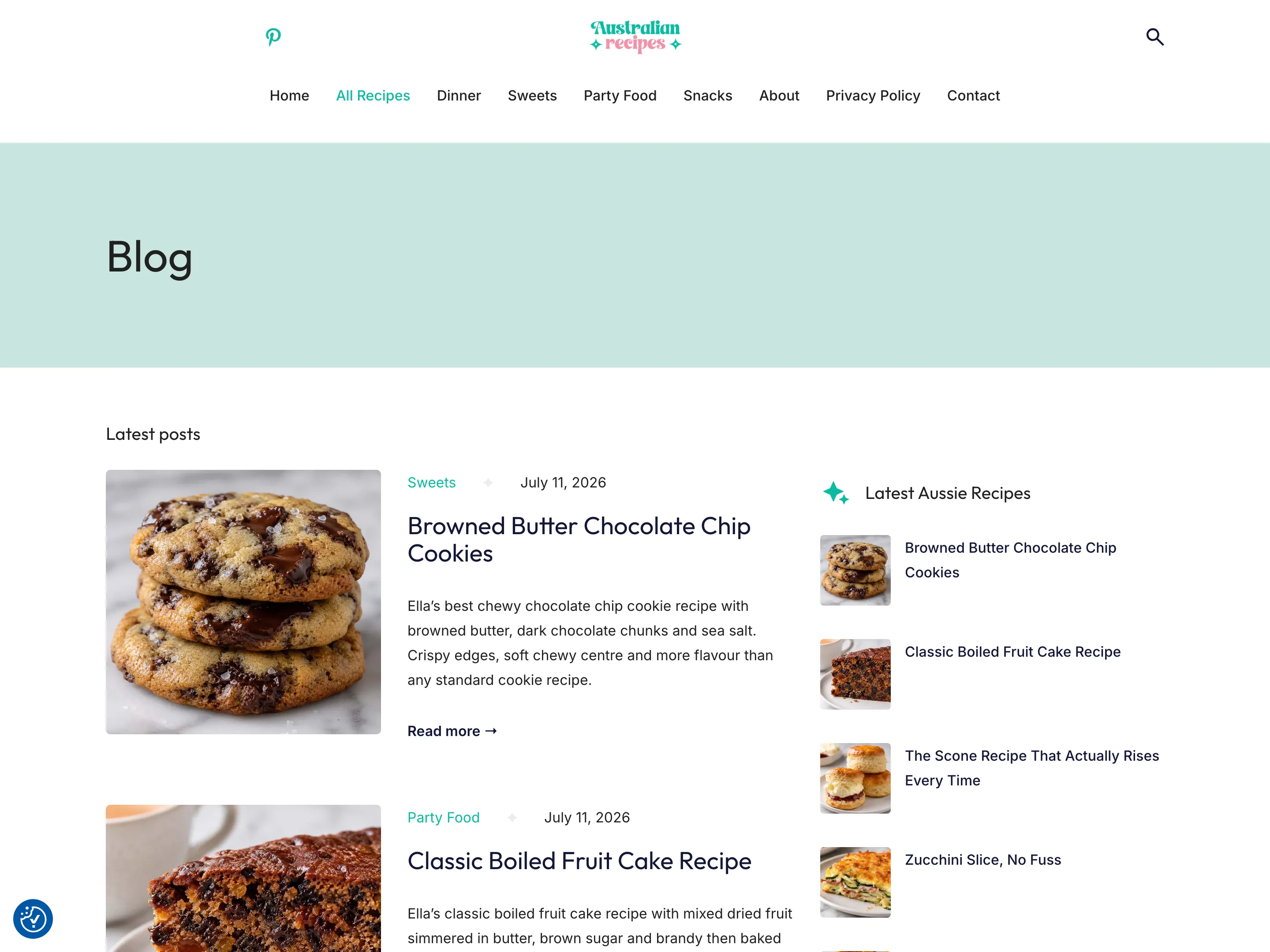
All Recipes — the full archive in one place
The shape of the archive
Sixty-one recipes, spread deliberately rather than by accident. No category carries more than a third of the site, and nothing has been left sitting in an uncategorised pile.
- 17recipesDinner
- 17recipesSweets
- 14recipesParty Food
- 13recipesSnacks
Built for daily publishing
The site runs on WordPress with a block theme, which was the right call because the person publishing is a cook, not a developer. New recipes go up in the block editor. The layout is not something that can be broken by adding a post.
Every recipe carries its author, its publication date and its last-updated date. Breadcrumbs sit above the title, the category is linked from the byline, and a contents list is generated from the headings rather than maintained by hand. The structure is doing the work, not the person typing.
Around that sit the pages a publication needs to be taken seriously: a named author with a biography, a contact route, an FAQ, and the full set of policies. They cost nothing to maintain and they are the difference between a site that reads as a business and one that reads as a hobby.
Sixty-one recipes. Four categories. One structure, settled first.
How the work ran
In this order, and no stage started before the one before it had produced something the client had seen.
Keyword research
What Australian home cooks actually search for, grouped into clusters with enough demand behind each to justify a category. This happened before any content existed, while the structure was still free to change.
Content architecture
The clusters became four categories, the categories became the navigation, and the URL structure was set to match. Decided once, at the point where changing it was still cheap.
The WordPress build
A block-theme build set up so the owner publishes without touching layout, with the media pipeline configured for food photography, which is the usual reason recipe sites run slowly.
The recipe template
Byline, dates, breadcrumbs, jump to recipe, print, and a generated table of contents. Designed around a phone on a kitchen bench rather than a desktop browser.
Search foundations
Clean URLs, metadata, structured content and the trust pages a publication is judged on. The groundwork that lets an archive compound instead of stalling.
The services behind AustRecipes
The same work is available on its own. These are the parts of it this project actually used.
WordPress & WooCommerce
WordPress and WooCommerce development: new builds, online stores, and rescues of slow or unmaintainable sites. Set up so your team can edit content without breaking anything.
SEO
SEO services from a senior-led studio: keyword research, technical and on-page SEO, structured data and Core Web Vitals, plus the off-page work that builds authority over time.
Web Development
Website creation and web development from a senior-led studio. WordPress, Next.js and Astro builds, with semantic markup, accessibility and performance handled while the site is being made.
AustRecipes questions
What people ask about this project once they have seen the numbers. If yours is not here, ask it on a first call.
What did Flexminde actually build here?
The website itself, on WordPress, plus the keyword research that set its structure. That means the content architecture, the URL structure, the recipe template and the publishing setup the owner uses day to day. The recipes and the photography are the client’s own.
Why decide the categories before writing anything?
Because restructuring a live archive is expensive and restructuring an empty one is free. Deciding the categories from research meant every recipe published since has had an obvious home, the navigation has never been rewritten, and no URL has had to be redirected. Most recipe sites arrive at a structure only after the mess forces one.
Where do the readers come from?
Around 88% of sessions in 2026 came from a search engine rather than social or direct. For a publication that is the traffic worth having, because it keeps arriving without anyone paying for it or posting daily to sustain it.
Can the owner publish without a developer?
Yes, and that was a requirement of the build rather than a bonus. Recipes are written and published in the block editor. Adding a post cannot break the layout, because the layout is not something a post controls.
How long does this kind of result take?
Longer than most people are told. Recipes is among the most competitive niches online, and an archive builds authority slowly by design. The figures here cover the first nine months of 2026, from a site that started with nothing. Anyone promising faster in this niche is guessing.
Your project could be the next one here.
Tell us what you are building and what already exists. You get a straight answer on whether it is a fit, and a written scope before anything starts.
- Senior-led from first call to launch
- Written scope before any build starts
- Built to WCAG 2.2 AA and tested
- No quote until you are ready